
As the old saying goes, “It’s not about the journey, but the destination”.
However, this isn’t true when it comes to landing page funnels!
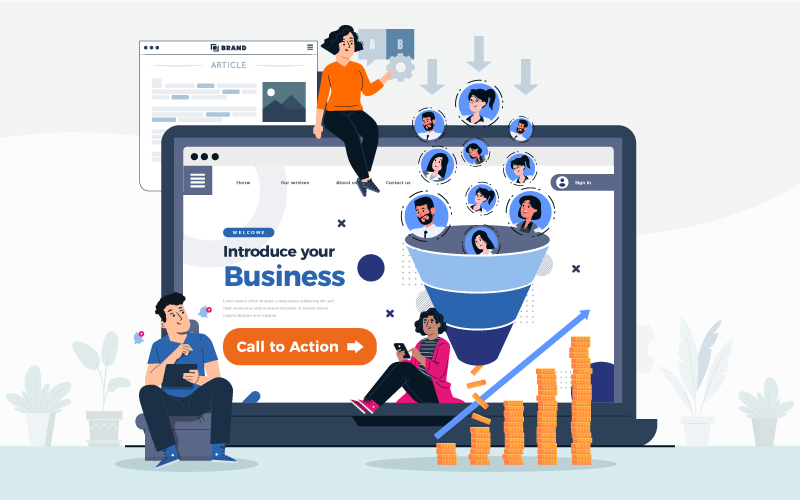
A collection of content that directs website visitors towards a buying decision, they’re a great way of targeting different audiences with products, services, and offers tailored to their needs.
What’s a landing page funnel?
Here’s a landing page funnel example to get you thinking.
Imagine you see an ad on Instagram for a coffee pod company offering a subscription service. Naturally, this intrigues you, so you click.
You’re then presented with a short quiz asking about the type of coffee you like, what flavours you prefer, and how many times you drink coffee a day.
Next, you’re asked to create an account to save your results, and are shown all the different subscription boxes that best suit your needs. And the bonus? You get a special discount if you sign up for a subscription right away.
This landing page funnel works on two levels. First, you’re locking in people ready to buy with a tempting discount. For those who aren’t quite ready yet, you have their email address to nurture them with personalised messages until they’re ready to commit.
So, in summary, a landing page funnel is designed to target people who are ready to buy and who are just checking you out, as well as promote a range of different products and services.
Pretty clever, eh? If you’re tempted by the power of the sales funnel landing page, here are some of our top tips for maximising your conversions.
1. Understand the different stages
Hand drawing an illustration of a sales funnel with its stages
Landing page funnels work so well because they target people at different stages of the buying journey. Before you begin building your sales funnel, it’s important to understand who you’re targeting, and how you’re going to pitch to them.
- Top of the funnel. These are people who aren’t ready to buy just yet, but are a good fit for your products and services
- Middle of the funnel. These are people that are engaging with your business. While they’re not ready to buy just yet, they will be very soon
- Bottom of the funnel. These are people who are ready to buy from you – it’s just a case of making the right offer
For example, you can engage potential customers at the top of the marketing funnel with SEO-enhanced content, PPC ads, or an intriguing brand-oriented video.
The aim is to draw attention by providing valuable information that resonally meets their needs, thereby stimulating curiosity about your brand.
Once you have captivated their interest through top-of-the-funnel strategies, the subsequent step involves generating leads via a meticulously optimised landing page.
This stage aims to deliver further value to the users while simultaneously capturing their details, such as an email address.
An effective approach to this can involve offering an eBook or a white paper for free, or encouraging visitors to subscribe to a newsletter.
Email marketing proves to be an excellent strategy for mid-funnel traffic – it allows you to engage with potential customers and cultivate their interest with more beneficial content.
All the while, you’re establishing trust and showcasing your brand’s expertise through case studies, testimonials, and other forms of social proof.
As leads begin to express interest in your products or services, it becomes imperative to guide them towards the bottom of the funnel.
Here, the goal is to increase their awareness of what you offer, how your offerings cater to their needs, and highlight any promotional deals. Service page landing pages are ideal for this, especially when encouraging the visitor to take further action such as ‘scheduling a demo’ or ‘arranging a call’ with your sales team.
By meticulously guiding potential customers through these stages, you increase the chances of turning these prospects into satisfied customers.
2. Create the right content

The main aim of landing page funnel content, whether a landing page, social media ad, email, or pop-up, is to push people down the funnel until they’re ready to buy.
Think about the target audience at each funnel stage and what they’re looking for. Let’s go back to our coffee pod example.
Someone at the top of the funnel might not know they want a coffee pod subscription just yet, so it’s a case of selling the benefits. How a subscription can save them time, how they can experiment with different flavours, how they don’t have to go out to the shops to get their caffeine fix, and so on.
Someone in the middle of the funnel wants to know more about your brand and its benefits. Think social proof through testimonials and reviews, stunning photos, and exclusive news about your latest coffee blends. Make them feel like they’re part of your gang!
Finally, someone at the bottom of the funnel has got their wallet out and is ready to buy! Tempt them with information about your tiered subscriptions, special discounts, and detailed specifications about your products.
Not sure how to build the perfect landing page funnel? The good news is that there are lots of sales funnel landing page templates and landing page funnel builders you can take advantage of. Mailchimp, Clickfunnels, and Unbounce all have templates you can adapt and use.
Alternatively, if you’re looking for something more bespoke, a digital marketing agency can help.
3. Eliminate all distractions

Think of getting your customers through the sales funnel like a race. You want to get them from the starting line (the top of the funnel) to the finishing line (the bottom of the funnel) as smoothly as possible.
If there is anything to divert them, such as an untied shoelace or an obstacle on the racetrack, it will waste time and potentially stop them from finishing!
The same logic applies to your landing page funnel. By ensuring a clean and distraction-free journey, you reduce the risk of your prospective customers wandering off. Lots of links (even internal ones), irrelevant copy, and annoying adverts can all cause customers to lose focus.
A good tip is to think like a customer and try and work your way through the sales funnel yourself. Is there anything you can see that might throw you off course? If so, get rid of it.
4. Don’t forget a clear call-to-action

Your call-to-action (CTA) is the asset that convinces your customer to take action, whether that’s signing up to your email list, or buying your product or service. Get it right, and the conversions will follow!
It’s essential to have the correct CTA in place for every step of the journey – the CTA at the top of the funnel will be significantly different from the one at the bottom of the funnel. Think about the emotions you want your customers to feel, and how they’ll benefit if they click the CTA button.
Here are some more tips to get you started:
- Try a range of CTAs and see which one people respond to best (more on that in the next section)
- Keep your CTA short, and stick to active rather than passive text
- Consider your target audience and what language resonates with them most. If they’re quirky with a sense of humour, use that to your advantage
- Urgency and scarcity work well and can encourage your customers to buy sooner rather than later
- Remove any risk – if you’re offering something for free, or don’t need credit card details, say so
5. Test and optimise as you go

It’s important to constantly test your landing page funnel to make sure it’s working as well as it should – this is known as conversion rate optimisation, or CRO. By making tweaks depending on what your prospective customers like and dislike, you’re more likely to see positive results.
Even little things like changing the colour of a call-to-action button can lead to extra sales. As far as CRO goes, it’s better to test little and often!
One of the best ways to see what works is by carrying out A/B testing. Test two identical versions of a landing page or email, with one small difference. Then send half your customers to each and see which leads to the most conversions.
6. And finally…
Don’t panic if people from the top of your funnel don’t make it all the way to the bottom. You can’t win them all!
The average sales funnel conversion rate is between 3% and 7% – meaning out of every 100 people starting at the top of the funnel, only three to seven will buy.
Focus on the people most likely to make a purchase, and provide them with a stellar experience. If you do, they’ll not just buy from you once; they’ll buy from you multiple times.
Bubblegum Search: your landing page funnel experts
We hope this guide has given you some ideas and inspiration when it comes to sales funnel landing pages. Plan your landing page funnel in advance, regularly check the analytics, and make tweaks as needed. You’ll be making sales and finding leads in no time at all!
If you want to get your landing page funnel off to a good start, we offer landing page design services that drive clicks and conversions. Our specialists will work to understand your goals and target audience, creating a series of landing pages that get people’s attention.
Get in touch with us today and take the first step towards a comprehensive landing page funnel that delivers results.